- INTACH celebrates World Elephant Day with the screening of Gaja Lok: Wild, Sacred, Eternal and an insightful talk on The Royal Pachyderm, exploring India’s elephant heritage and its legacy in numismatics.
New Delhi | 12 August 2026 – World Elephant Day — On the occasion of World Elephant Day, the Indian National Trust for Art and Cultural Heritage (INTACH) hosted the release and screening of its documentary film, Gaja Lok: Wild, Sacred, Eternal, under its Project Gaja-Lok, which explores India’s enduring relationship with the Asian elephant through the interconnected dimensions of cultural heritage, history, ecology and living knowledge. Shri Ashok Singh Thakur, Chairman, INTACH, welcomed the Chief Guest, Mr. Tim Curtis, Director and Representative, UNESCO Regional Office for South Asia, and the Special Guest, Mr. K. N. Shrivastava, I.A.S. (Retd.), Director, India International Centre. This was followed by an introduction to the Gaja-Lok project by Shri Ravindra Singh, I.A.S. (Retd.), Member Secretary, INTACH, and an introduction to the documentary film by Ms. Nerupama Y. Modwel, Principal Director, Intangible Cultural Heritage Division, INTACH.
The speakers reaffirmed INTACH’s longstanding commitment to the conservation of India’s natural, cultural, built and living heritage through research, documentation, education, advocacy and conservation. The occasion also recognised the creative contribution of filmmakers Mr. Himanshu Joshi and Mr. Kapil Batra, whose script, narration and direction shaped the documentary, and acknowledged the INTACH’s Intangible Cultural Heritage (ICH) Division team for its research, documentation and creative contribution to the film.
Support and Recognition of Gaja-Lok
In his remarks, Mr. Tim Curtis expressed his appreciation for the Gaja-Lok initiative and the documentary film, commending the effort to highlight the cultural and ecological dimensions of elephant heritage. He emphasised the important role of Intangible Cultural Heritage in safeguarding knowledge, traditions, and ecological and cultural practices. He also highlighted the significance of the nature-culture relationship, underscoring the value of recognising ecological landscapes and cultural practices as interconnected dimensions of heritage.
Mr. K. N. Shrivastava congratulated the filmmakers and the INTACH’s Intangible Cultural Heritage Division team, commending the documentary for bringing together the cultural and ecological dimensions of elephant heritage in an engaging and accessible form.
Project Gaja-Lok
The project is supported by the Ministry of Culture, Government of India, and Project Elephant, Ministry of Environment, Forest and Climate Change (MoEFCC), Government of India, is an institutional partner of Project Gaja-Lok. The documentary is a key component of Project Gaja-Lok, an INTACH initiative, examining the cultural, historical and ecological significance of elephants across India and Asia. The project brings together historical research, documentation of tangible and intangible heritage, ecological knowledge and contemporary conservation concerns to understand elephant
heritage as a living and evolving field.
Its documentation explores the many ways elephants have been represented and understood through mythology, religious traditions, literature, art, architecture, folklore, festivals and material heritage. It also examines the changing realities of elephant landscapes, including habitat transformation, conservation challenges, climate change, ecological resilience and human-elephant interactions.
A significant component of the project is its documentation of indigenous and community based knowledge, including traditional practices, oral histories, knowledge of ethno elephantology, and established systems of coexistence. These perspectives demonstrate that elephant heritage extends beyond historical records and monuments to encompass knowledge and practices sustained within communities and landscapes.
Documentary Film- Gaja Lok: Wild, Sacred, Eternal
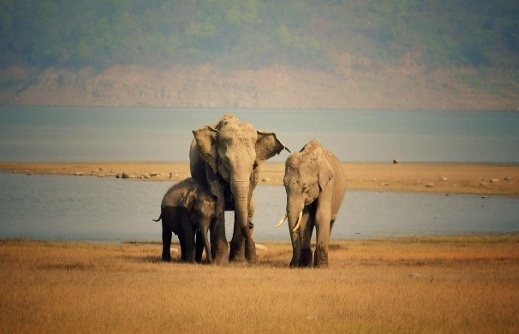
Gaja Lok: Wild, Sacred, Eternal traces the depth and continuity of India’s relationship with the Asian elephant through the perspectives of conservationists, policymakers, scholars, forest officials, mahouts and communities. The film presents the elephant as both a keystone species and a culturally significant presence, showing how ecological landscapes and cultural practices have influenced one another over generations. Alongside traditions and knowledge systems associated with elephants, it draws attention to the contemporary pressures affecting their habitats and long term survival.
The documentary calls for an integrated understanding of elephant heritage- one that recognises the importance of healthy ecosystems, cultural landscapes, community knowledge and sustainable coexistence in safeguarding both elephants and the environments in which they live.
Towards Safeguarding of Elephant-related Heritage and Landscapes
The release of Gaja-Lok: Wild, Sacred, Eternal marks an important milestone in INTACH’s continuing efforts to document, recognise and safeguard elephant heritage and the landscapes associated with it. Through research, documentation, filmmaking, exhibitions, utsavs and public engagement, Project Gaja-Lok seeks to strengthen recognition of India’s elephant-related heritage while supporting the transmission of the knowledge and practices through which communities have understood and lived alongside elephants. The project also contributes to a wider dialogue on cultural continuity, ecological resilience and sustainable coexistence.
With the support of scholars, conservationists, communities, heritage practitioners and institutional partners, INTACH looks forward to taking Gaja-Lok forward as a sustained contribution to the recognition, safeguarding and transmission of elephant-related heritage, while advancing broader conversations on ecological resilience, conservation, and the future of human-elephant coexistence.
The film screening was followed later in the afternoon by a lecture by Dr. Sanjay Garg, Former Deputy Director of the National Archives of India, on The Royal Pachyderm: The Numismatic Journey of the Asian Elephant. The talk provided an overview of elephant motifs in the numismatic art of South Asia, exploring their artistic and symbolic significance within their historical contexts.