- From Ground-Level Dialogue to National Action, Youth Voices Must Shape Policy : Smt. Raksha Khadse
- Phased Consultations Enable Evidence-Based and Inclusive Decision-Making : Dr. Pallavi Jain Govil
- Chintan Shivir of Youth Affairs & Sports Ministers Begins in Srinagar; Focus on Youth-Led Development under Viksit Bharat@2047
- Inclusive and Participatory Governance Key to Harnessing India’s Demographic Dividend
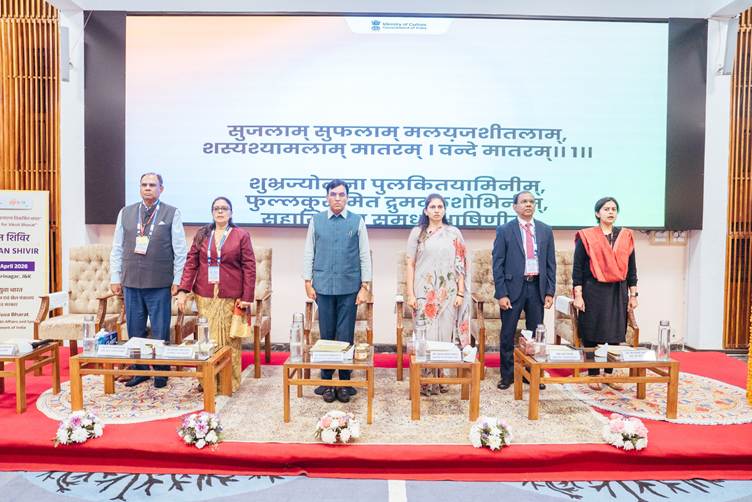
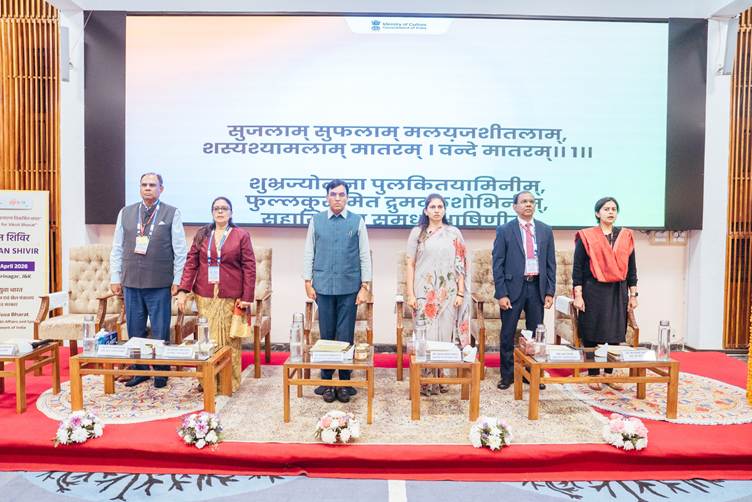
New Delhi. ; The three-day Chintan Shivir of Ministers of Youth Affairs & Sports from States and Union Territories commenced today at the Sher-i-Kashmir International Convention Centre (SKICC), Srinagar. The Shivir is being led by Union Minister for Youth Affairs & Sports, Dr. Mansukh Mandaviya, and Minister of State for Youth Affairs & Sports, Smt. Raksha Nikhil Khadse.
The first day, themed “Samvaad Se Samadhaan”, focused on strengthening youth engagement frameworks through MY Bharat, with emphasis on policy alignment, institutional convergence and outcome-oriented programme delivery.
In his keynote address, Union Minister Dr. Mansukh Mandaviya highlighted the importance of inclusive and participatory governance. He stated, “The vision of this Chintan Shivir is to ensure individual involvement by bringing every youth voice into the decision-making process.”
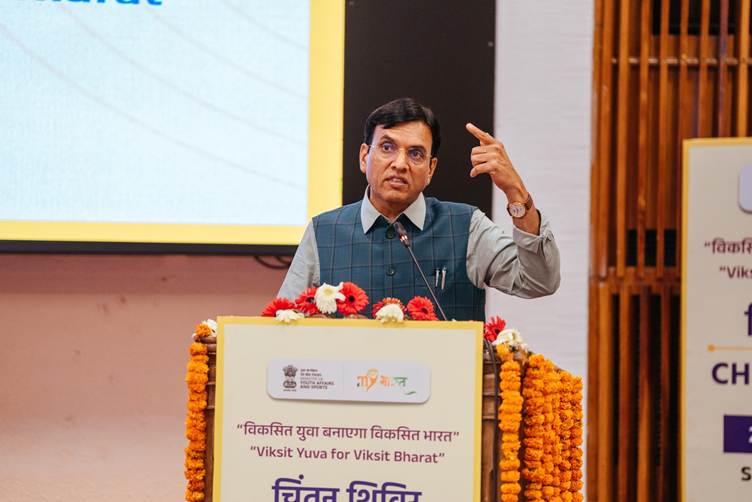
Emphasising India’s demographic strength, he noted, “India has the world’s most powerful demographic dividend, and to realise the vision of Viksit Bharat 2047, it is essential that youth are actively involved in shaping policies that will ultimately benefit them.”
He further underlined the need for collaborative nation-building, stating, “We must make youth equal partners in achieving the goals of 2047, not just beneficiaries of schemes.”
Highlighting institutional mechanisms, he added, “Proper nurturing of youth can be achieved through District Youth Officers (DYOs), who can effectively channelise ideas emerging from the grassroots.”
Stress on grassroots strengthening was also reiterated as he said, *”Our groundwork must be strengthened through vibrant youth clubs that can act as the foundation of youth engagement.”
Calling for robust policymaking processes, he emphasised, “Stakeholder consultation is essential for effective policy formulation, and transparency must ensure that input directly translates into output without leakages.”
Minister of State Smt. Raksha Nikhil Khadse noted that the Chintan Shivir provides a platform for meaningful dialogue and action. She stated, “This Chintan Shivir offers a platform for fruitful discussions to identify key issues and evolve actionable strategies for the youth of the country.”
She further emphasised participatory governance, saying, “It is imperative that youth are actively involved in the decision-making process at every level.”
Highlighting the importance of grassroots inputs, she added, “Discussions must flow from the ground level through DYOs to the national level, ensuring that policies reflect real needs and aspirations.”
Dr. Pallavi Jain Govil, Secretary, Department of Youth Affairs, stated that the present Chintan Shivir builds upon earlier deliberations. She noted, “This Chintan Shivir is a continuation of the consultative process initiated in Bengaluru, following a phased approach.”
Emphasising inclusivity in governance, she said, “The phased conduct of Chintan Shivir provides an opportunity for officers at all levels to present their challenges and innovative ideas.”
She added, “Such structured consultations enable informed and evidence-based decision-making, with youth playing a central role in building Viksit Bharat 2047.”
Earlier, Shri Nitesh Kumar Mishra, Additional Secretary (Youth Affairs), welcomed the participants and outlined the objectives of the Shivir.
Technical sessions on Day 1 included detailed deliberations on the Annual Action Plan 2026–27, focusing on policy alignment, strategic priorities, gap analysis and implementation frameworks. Presentations also highlighted best practices in youth club development, sustainability models, and learnings from previous programme cycles.
Discussions further examined strengthening digital youth engagement through the MY Bharat platform, enhancing grassroots participation, and improving convergence between MY Bharat and the National Service Scheme (NSS), including fund flow mechanisms and programme coordination.
The day concluded with a synthesis of key insights and the formation of thematic groups to take forward focused deliberations in subsequent sessions. The Chintan Shivir will continue over the next two days with emphasis on cross-learning, policy alignment and action-oriented outcomes, contributing to the broader vision of building an empowered youth ecosystem under Viksit Bharat@2047.