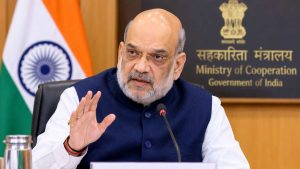
New Delhi: Union Minister for Environment, Forest and Climate Change, Shri Bhupender Yadav, today highlighted the progress in operationalising the India-Japan Joint Crediting Mechanism (JCM), emphasising its potential to mobilise finance, facilitate technology transfer and advance low-carbon development.
Addressing the 12th JCM Partner Countries’ Meeting at the Japan Pavilion during UNFCCC COP31 in Antalya, Türkiye, the Minister said that mechanisms such as JCM can promote equitable and scalable climate cooperation while supporting the national priorities of developing countries.
Japan Highlights JCM’s Potential to Accelerate Global Decarbonisation
Addressing the event, the Minister of Environment (Japan), H.E. Mr. Sasakawa Hiroyoshi highlighted that JCM holds tremendous potential to foster global partnerships in mobilising finance and leveraging technology to advance decarbonisation.
He described it as a practical model to accelerate decarbonisation projects across the globe. Japan would extend all support and knowledge to its partners to achieve this goal, he stated.
Ministers from other JCM partner countries, including Oman, Mongolia, Palau, Papua New Guinea, Tunisia and Ukraine, also presented their views during the event.
India-Japan JCM Established Under Article 6.2 of Paris Agreement
Highlighting the longstanding India-Japan partnership, Shri Yadav noted that the two countries signed a Memorandum of Cooperation on August 7, 2025, establishing the JCM under Article 6.2 of the Paris Agreement.
The mechanism is expected to support India’s Nationally Determined Contribution (NDC) and Long-Term Low Emission Development Strategy (LT-LEDS), with projects aligned with Government-approved activities and applicable JCM requirements.
Beyond emission reductions, it is expected to strengthen domestic capabilities, skills and local value chains while generating wider sustainable development benefits.
JCM Implementation Rules Adopted; Operational Manual Launched in 2026
The Minister highlighted significant progress in implementation, including:
- June 8, 2026: Adoption of the Rules of Implementation by the Joint Committee.
- September 30, 2026: Launch of the JCM Operational Manual.
The Manual establishes procedures for:
- Project submissions.
- Methodology development.
- Project design.
- Sustainable development assessment.
- Independent validation and verification.
- Project registration.
- Credit issuance.
- Authorisation of mitigation outcomes.
These procedures are intended to provide a structured framework for implementing JCM projects and ensuring that they comply with the applicable requirements.
India and Japan Working Towards Digitalising JCM Project Cycle
Shri Yadav said India and Japan are working towards digitalising the JCM project cycle to streamline submissions, facilitate processing and enhance transparency.
The immediate priorities include:
- Inviting applications for Third-Party Entities.
- Receiving proposed methodologies.
- Facilitating Project Idea Note submissions.
He also underscored the importance of strengthening domestic validation and verification capacities to ensure robust monitoring, reporting and verification.
India Reaffirms Commitment to Transparent and Equitable Climate Cooperation
Reaffirming India’s commitment to working closely with Japan, the Minister emphasised that the success of JCM should be measured not only by emission reductions but also by the finance mobilised, technologies transferred, domestic capacities strengthened and sustainable development benefits generated.
He called for making the mechanism a model of transparent, equitable, environmentally robust and development-oriented climate cooperation.
The India-Japan Joint Crediting Mechanism is expected to contribute to broader climate objectives by facilitating collaborative projects, supporting technology transfer and strengthening the capacity of developing countries to pursue low-carbon development.