New Delhi: The Government of India has made significant progress in implementing the PM e-Bus Sewa–Payment Security Mechanism (PSM) Scheme, which aims to promote electric buses for public transport across the country.
According to a statement shared in the Lok Sabha by Bhupathiraju Srinivasa Varma, the scheme was officially notified on October 28, 2024, and several implementation milestones have already been achieved.
The scheme guidelines and Standard Operating Procedure (SOP) have been released to streamline operations. As of March 2, 2026, 19 States and Union Territories have submitted the Direct Debit Mandate (DDM) to the Reserve Bank of India to facilitate payments under the scheme.
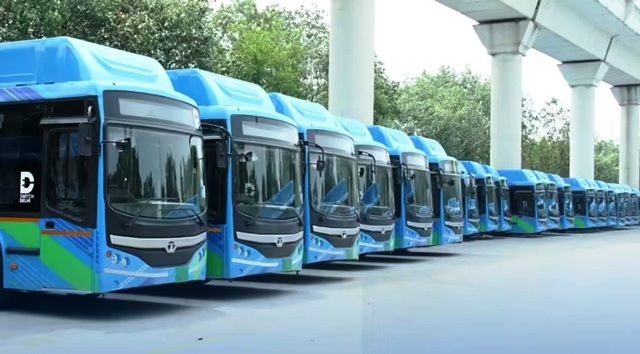
Under the initiative, tenders for 6,228 electric buses have been concluded as of February 28, 2026, while Letters of Award (LoA) for 4,720 buses have already been issued by Public Transport Authorities.
The government is also implementing the PM E‑DRIVE Scheme, under which tenders for 10,900 buses have been finalized, and procurement for 2,900 additional buses is currently underway.
To support the payment system, the government has disbursed ₹500 crore in FY 2025-26 to Convergence Energy Services Limited for establishing the Payment Security Mechanism (PSM) Fund. CESL acts as the central implementing agency responsible for managing payments to electric bus operators and overseeing national-level aggregation of e-bus operations.
The scheme provides payment security coverage for up to 12 years for each deployed bus, while the deployment timeline is typically two years from the signing of the concession agreement between the Public Transport Authority and the manufacturer.
State-wise allocations indicate that 23,800 electric buses have been sanctioned across India under the combined PM E-DRIVE and PM e-Bus Sewa schemes. Major allocations include 5,250 buses in Karnataka, 4,109 in Maharashtra, 2,800 in Delhi, and 2,550 in Gujarat.
The initiative is expected to strengthen clean urban mobility, reduce carbon emissions, and modernize India’s public transport infrastructure through large-scale adoption of electric buses.