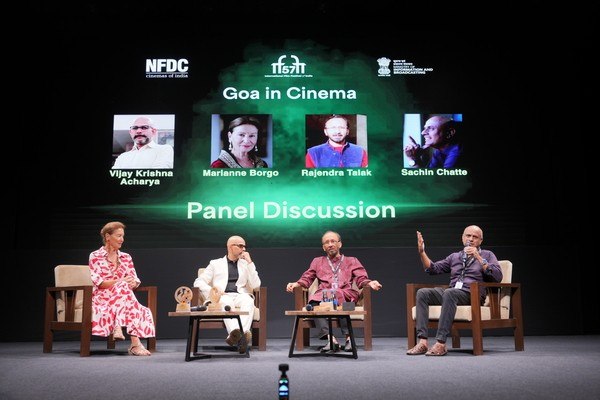
Goa, 23 November 2026 : Goa’s potential as a filmmaking destination, the scope for strengthening film-related infrastructure and the importance of preserving its distinctive natural and cultural heritage formed the key themes at an engaging panel discussion titled ‘Goa in Cinema’ at the 57th International Film Festival of India (IFFI).
Bringing together perspectives from Konkani, Hindi and international cinema, the session featured noted Konkani filmmaker Rajendra Talak, Hindi film director and screenwriter Vijay Krishna Acharya, and French actress Marianne Borgo. Film critic Sachin Chatte moderated the discussion.
Speaking about Goa’s potential to emerge as a prominent filmmaking destination, Vijay Krishna Acharya highlighted the distinctive visual and cultural appeal of the state, which has attracted filmmakers over the years. He observed that Goa possesses a unique and exotic identity that sets it apart from mainstream cinematic locations. Citing the film Kabhi Haan Kabhi Naa, he said that its characters and setting were so organically connected that the story could flourish only in Goa.
Emphasising the need to make filmmaking economically viable, Acharya called for the establishment of a film city that would enable filmmakers to shoot in Goa across different budget categories. “Cost is a crucial consideration in filmmaking. Goa could attract more productions if it offered suitable infrastructure at competitive costs,” he pointed out. He also highlighted the potential of film schools and film literacy centres in providing local people with access to professional training and employment opportunities in the film industry. Such initiatives, he said, could create a generational impact and help Goa emerge as a unique artistic centre.
Offering a contrasting perspective, Rajendra Talak expressed reservations about the viability of a film city in the state. He observed that the state offered considerable scope for film productions, with its natural landscapes, traditional houses and heritage sites providing a wide range of settings. He also emphasised the importance of ensuring that initiatives to promote filmmaking remain aligned with the preservation of Goa’s cultural identity and natural environment.
Talak pointed out that a large part of Goa remained unexplored as a filming destination. “Hardly ten per cent of Goa has been explored,” he said, highlighting the opportunities available for filmmakers to discover new locations and develop stories rooted in the state’s diverse settings. He encouraged filmmakers to explore its existing landscapes and find stories that fit naturally into them.
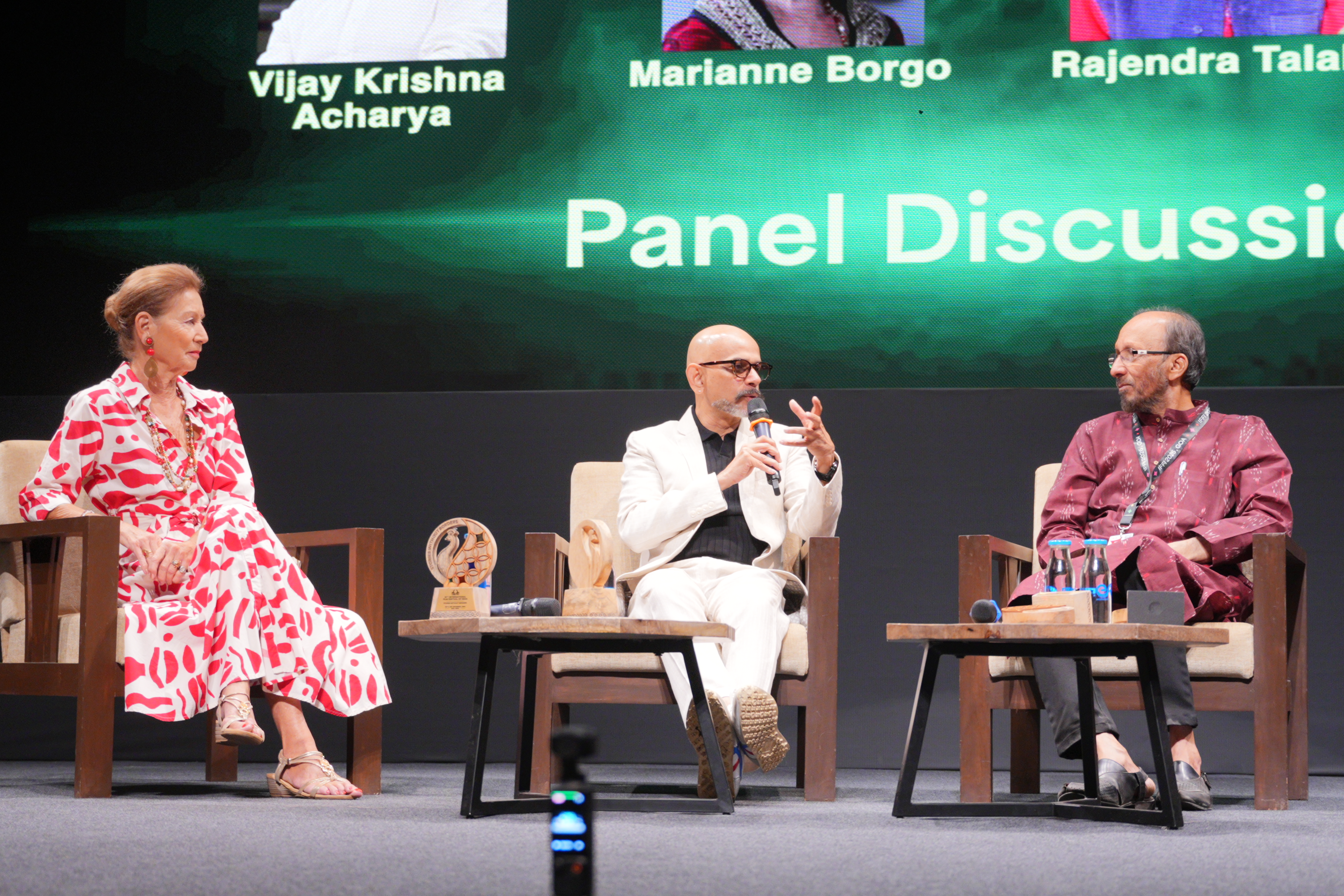
Marianne Borgo brought the perspective of someone who has made Goa her home. While acknowledging the importance of infrastructure, she underlined the value of the state’s natural environment, traditional houses and cultural heritage. She urged filmmakers to approach shooting activities with sensitivity and responsibility, to ensure that Goa’s distinctive character is preserved. She also recalled discovering the remarkable talent of Konkani cinema through the film O Mariya, which she watched at IFFI.
The panel also discussed the stereotypical portrayal of Goa and its people in cinema, and underscored the opportunities for filmmakers to explore a wider range of narratives and present a more diverse cinematic representation of Goa.