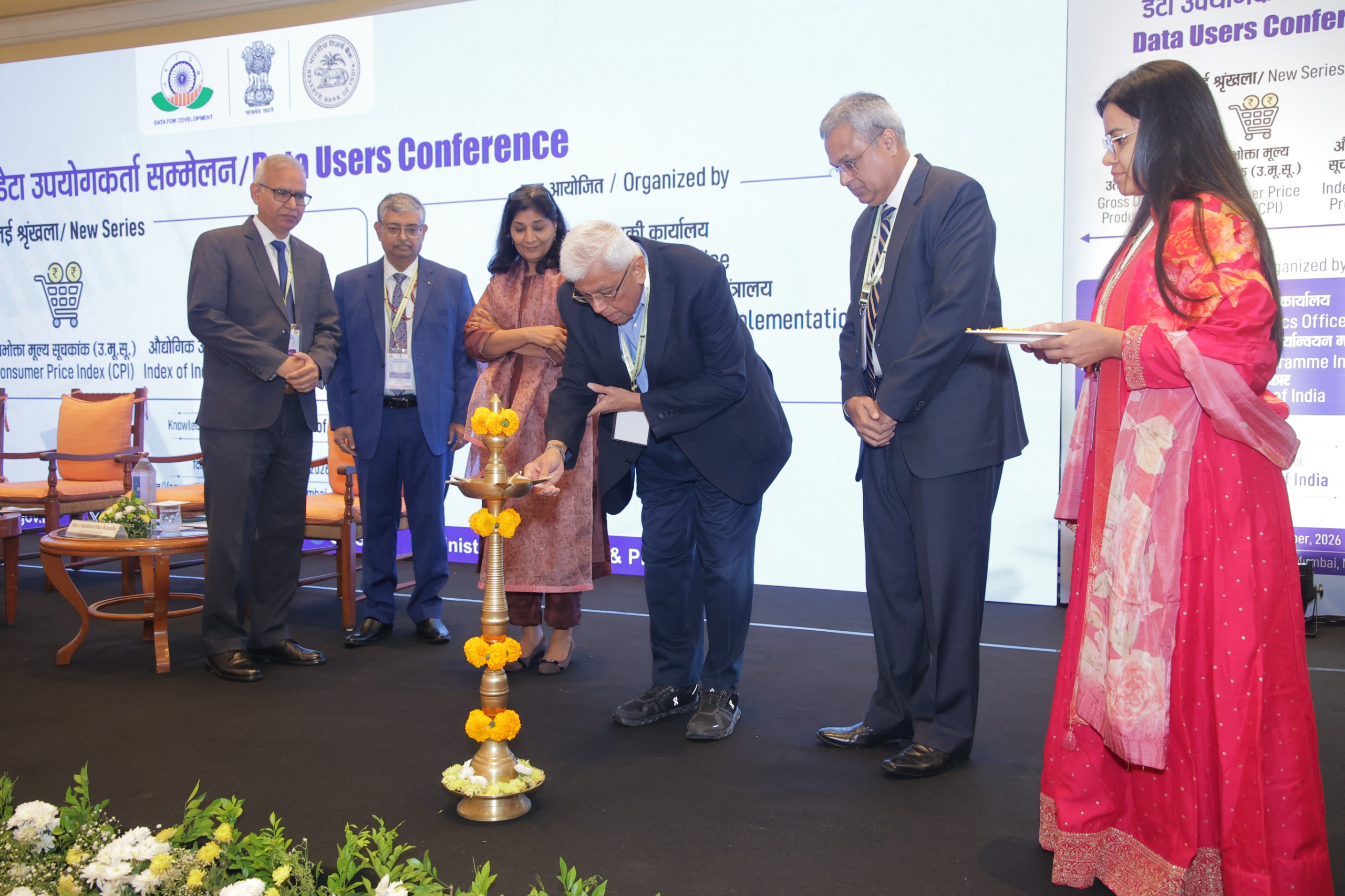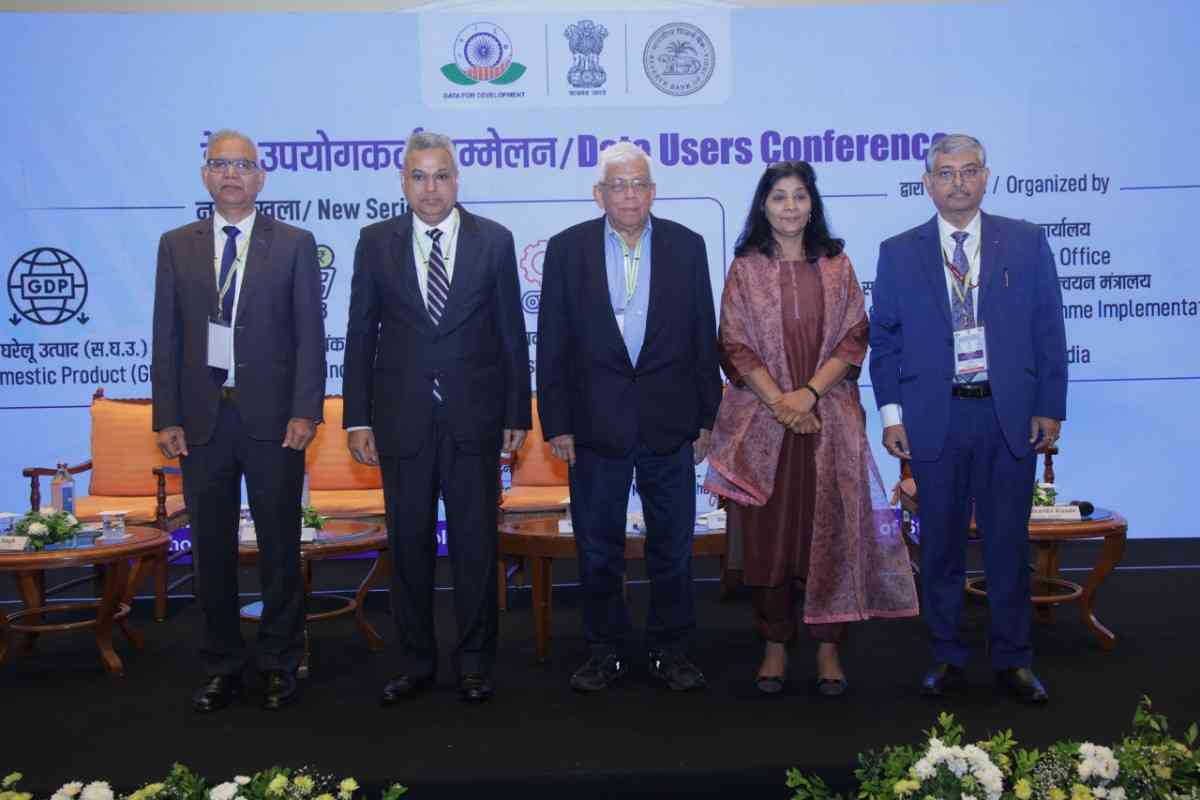
Mumbai : The The Ministry of Statistics and Programme Implementation (MoSPI), with the Reserve Bank of India (RBI) as the Knowledge Partner, organised a “Data Users Conference on the New Series of Gross Domestic Product (GDP), Consumer Price Index (CPI) and Index of Industrial Production (IIP)” on 23 November 2026 at Mumbai. Following the release of revised series of GDP, CPI and IIP at different points during 2026, the conference was organised to familiarise data users with the methodological changes, data sources and key improvements incorporated in each of the revised series. It also aimed to facilitate a better understanding of these changes and their implications for the resulting estimates.
The conference brought together representatives of the Reserve Bank of India (RBI), SEBI, economists, forecasters, credit rating agencies, experts from financial institutions and the banking sector, academia, research institutions, industry and investor organisations, users of official statistics and senior officials of the Central and State Governments. The inaugural session comprised welcome remarks by Dr. Dalip Singh, Director General (Central Statistics), MoSPI; the setting of the context by Dr. Saurabh Garg, Secretary, MoSPI; the inaugural address by Dr. Poonam Gupta, Deputy Governor, RBI; the keynote address by Shri Deepak Parekh, Former Chairman, HDFC; and the vote of thanks by Shri Siddhartha Kundu, ADG, National Accounts Division, MoSPI. A booklet containing brief concept notes on the revised series of these indices was shared with the participants.
Dr. Dalip Singh, Director General (Central Statistics), in his welcome address, noted that macroeconomic statistics form the foundation of economic analysis, policy making and informed decision making and that GDP, CPI and IIP together provide a comprehensive measure of economic activity and growth. He observed that, as the structure of the economy, production processes, consumption patterns and technology continue to evolve, the statistical system must evolve continuously to remain representative of prevailing economic realities. He recalled that MoSPI had completed the base revision of these three indicators and launched the new series during 2026, with greater use of administrative and survey-based data, wider coverage and important methodological improvements and acknowledged the contribution of expert committees, central ministries, State Governments, RBI and other institutions.
Dr. Saurabh Garg, Secretary, MoSPI, while setting the context, noted that the conference was being held in Mumbai after about a year, this time after the completion of the base revision exercise, with the first-quarter GDP estimates of the new series already released and the second-quarter estimates due shortly. He stated that the two-year exercise had been made possible by the support of several expert committees, other ministries and departments, State Governments, the RBI and other regulatory agencies. Looking ahead, he outlined the Ministry’s priorities, including the rebasing of Gross State Domestic Product to 2022-23 and the development of District Domestic Product estimates for more granular decision making; preparation for the implementation of the System of National Accounts (SNA) 2025, with its focus on well-being and distributional accounts, recognition of data as an asset and valuation of natural resources; the development of satellite accounts for the space, culture, digital and city economies; the stabilisation of the Index of Services Production; and the updating of national industrial and product classifications, in support of timely, relevant and evidence-based policy making towards the goal of Viksit Bharat 2047.
Dr. Poonam Gupta, Deputy Governor, RBI, in her inaugural address, congratulated MoSPI on completing the base revision of the three series in a timely manner and commended the Ministry’s extensive consultations with users. She observed that a base revision is not merely a routine technical update but records important shifts in the structure of the economy, consumption behaviour and the sources of growth, the better measurement of which is important for policy making. She highlighted the key features of the revised series — the use of double deflation and a wider range of administrative data in the national accounts, the alignment of demand- and supply-side GDP estimates through the Supply-Use Table framework, the updated weighting pattern and more precise measurement of core inflation in the CPI and the greater weight assigned to technology- and consumption-oriented sectors in the IIP. She noted that, for monetary policy, the improvements are expected to yield estimates that are more stable across successive vintages with smaller revisions and reaffirmed RBI’s interest, as a committed user of the data, in a clear and predictable approach to revisions and continued dialogue with MoSPI.
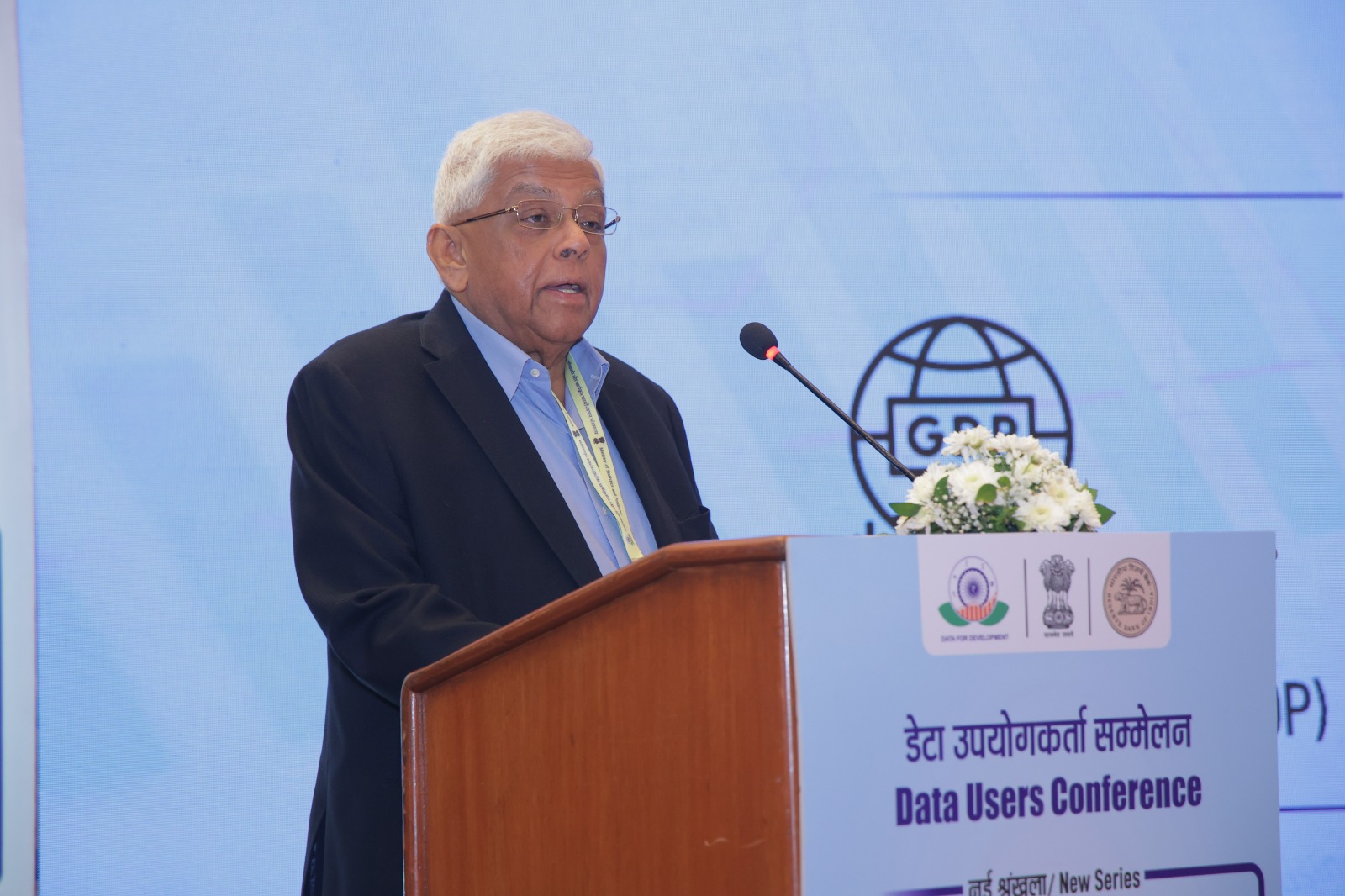
Shri Deepak Parekh, Former Chairman, HDFC, in his keynote address, drew on more than five decades of experience to underline how macroeconomic numbers move markets, shape investor sentiment and guide decisions of banks, companies and policymakers. Observing that “what gets measured gets managed and what is monitored can be improved”, he said that numbers must reflect reality as it is and that the independence and integrity of statistical institutions, as providers of a public good, must remain sacrosanct. He described 2026 as a year of modernising India’s statistical architecture, noted that the revisions address concerns earlier raised on the national accounts and welcomed the growing use of high-frequency indicators and new data sources such as night lights and online search trends, while cautioning that technology and AI must be supported by appropriate safeguards and cannot substitute for judgement. He also flagged the need for official data on housing statistics, given the sector’s strong backward and forward linkages with allied industries.
The inaugural session was followed by three technical sessions on the new series of GDP, CPI and IIP, in which officers of MoSPI and the RBI presented the methodological changes, data sources and key improvements.
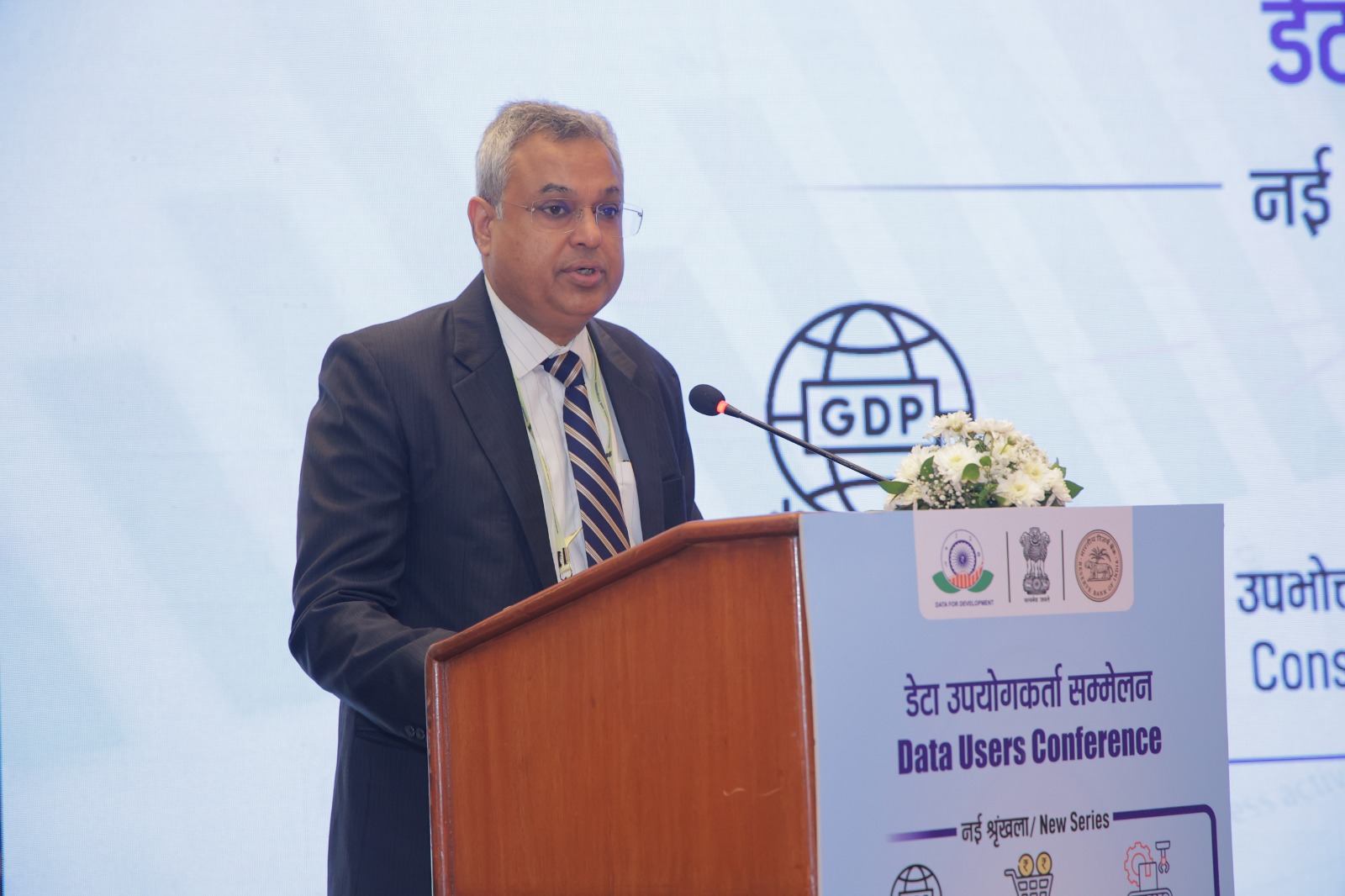
The first technical session, moderated by Prof. Basanta Kumar Pradhan, Director (Vice Chancellor), IGIDR, discussed the new GDP series with base year 2022-23. Shri Rajesh Kumar Sharma, Deputy Director General, National Accounts Division, MoSPI, explained that the revision reflects changes in the structure of the economy, relative prices and consumption patterns, along with new data sources and updated international standards. He elaborated on the key changes, namely the robust and direct annual measurement of the unincorporated sector using ASUSE and PLFS data; the use of MCA-21 filings to allocate corporate GVA across activities; the revised treatment of food subsidies routed through the FCI, government pension contributions and imputed rent on government housing; the introduction of double deflation for constant-price estimation of manufacturing GVA in addition to agriculture; improvements in the estimation of private final consumption expenditure; and an expanded Supply-Use Table integrated with the national accounts. Changes in the compilation of the quarterly national accounts were also presented, including proportional benchmarking, updated price indices and the enhanced use of administrative data from GST, e-VAHAN and PFMS. Users were briefed on the release of the detailed National Accounts Statistics publication on 31 August 2026 and of the ‘Sources and Methods for Compilation of National Accounts Statistics’ document on 21 September 2026. Dr. Anirban Sanyal, Assistant Adviser, RBI, presented RBI’s model-based nowcasting of current-quarter real GDP and non-agricultural GVA growth, drawing on about 120 high-frequency indicators and approaches including the dynamic factor model, machine-learning models and ridge regression, noting that the dynamic factor model performed best.
The second technical session, moderated by Ms. Rajani Sinha, Chief Economist, CareEdge Group, discussed the new CPI series with base year 2024=100. The Price Statistics Division, MoSPI, presented the revision as a significant step towards modernising India’s price statistics and keeping retail inflation measurement aligned with contemporary household consumption patterns and evolving market structures. The revised series uses the Household Consumption Expenditure Survey 2023-24 for deriving expenditure weights and incorporates an updated consumption basket, a revised weighting structure, expanded geographical and market coverage, adoption of the COICOP 2018 classification and improved methodologies for price collection and index compilation. Extensive use of administrative and e-commerce data in the CPI 2024 series was also highlighted. The RBI presented the implications of these changes for inflation measurement and monetary policy.
The The third technical session, moderated by Shri Ravi Shankar, Executive Director, Reserve Bank of India (RBI), focused on the new series of the Index of Industrial Production (IIP) with base year 2022–23, presented by the Economic Statistics Division (ESD), MoSPI. Ms. Ankita Singh, Deputy Director General, MoSPI, delivered a presentation on the revision of the base year from 2011–12 to 2022–23, highlighting the major methodological and coverage-related improvements introduced in the new series.The revised IIP series broadens its coverage by introducing new sectors, namely “Water Supply, Sewerage and Waste Management” and “Gas Supply”, and by including minor minerals and rare earth minerals in the Mining and Quarrying sector. In terms of greater disaggregation, the Mining and Quarrying sector now provides three sub-sectoral indices, namely Metallic Minerals, Non-Metallic Minerals and Fuel Minerals. Similarly, the Electricity Index is now disseminated through two sub-indices, distinguishing electricity generation from renewable and non-renewable sources. The sectoral and sub-sectoral weights have been revised using the relevant data from the National Accounts Statistics and the Annual Survey of Industries (ASI) for the base year 2022–23. An important feature of the new series is the provision for substitution of factories that have closed down, discontinued production or changed their product lines, thereby ensuring that the sample remains representative throughout the life of the series. Further, the Output Producer Price Index (Output PPI) is being used for deflation, in line with international recommendations. The compilation of a chain-linked IIP will also be undertaken on a trial basis to assess its feasibility and reliability.
The Reserve Bank of India (RBI) also made a presentation on industrial and corporate sector analysis and data dissemination. The presentation highlighted how corporate-sector data, sourced from listed companies’ financial results, audited annual accounts and quarterly surveys, supports monetary policy formulation, facilitates the assessment of demand conditions ahead of GDP releases, and provides insights into private-sector investment and financial stability. The RBI also showcased its Database on Indian Economy (DBIE) and the RBIDATA mobile application, highlighting ongoing initiatives to enhance the timeliness, accessibility and standardisation of economic data.
Each technical session was followed by an open house discussion in which participants offered feedback on the new data sources, methodologies and their implications for policy and forecasting and officials of MoSPI and the RBI responded to the queries raised. In the concluding session, closing remarks were delivered, followed by the vote of thanks by the Deputy Director General, National Accounts Division, MoSPI.
The conference provided a valuable opportunity for data users and official data compilers to directly discuss the changes in the methodologies, their interpretation and implications, and reaffirmed MoSPI’s commitment to promoting better understanding and effective use of official statistics, in line with the vision of “data for development” and Viksit Bharat 2047.