- Centre-States partnership advances reforms for sustainable rural water delivery for an accountable and community-driven water governance
New Delhi. ; As a remarkable step towards sustainable, assured, and citizen-centric rural drinking water supply across India, reform-linked Memoranda of Understanding (MoUs) were signed today under Jal Jeevan Mission (JJM) 2.0 with two States (Manipur and Bihar).
The reform‑linked MoU mandates a Gram Panchayat‑led, service‑based and community‑centred model of rural water governance, aligned with the objectives of Jal Jeevan Mission 2.0 and seeks to ensure that every rural household has access to drinking water supply in adequate quantity and of prescribed quality on a regular basis, through strengthened community participation (Jan water supply systems, thereby enhancing the living standards of rural communities contributing to long‑term water security aligned with the national vision of Viksit Bharat @2047.
The MoU with Manipur was signed in the presence of the Union Minister of Jal Shakti, Shri C.R. Patil, and Chief Minister of Manipur, Shri Yumnam Khemchand Singh.


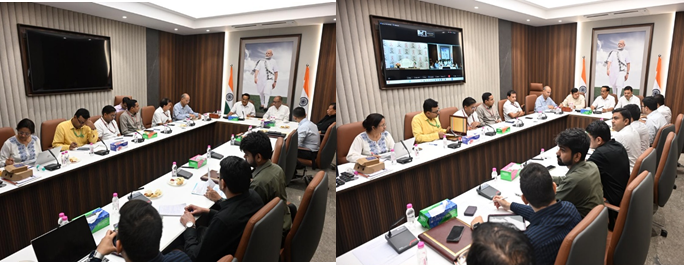
For Bihar, the MoU signing was done in the presence of Union Minister of Jal Shakti, Shri C.R. Patil, and Minister of State, Dr. Raj Bhushan Choudhary and Shri Sanjay Kumar Singh, Minister (PHE) Bihar, during separate scheduled meetings.
Senior officials from the Department of Drinking Water and Sanitation (DDWS), including Shri Ashok K. K. Meena, Secretary, DDWS, Shri Kamal Kishore Soan, Additional Secretary & Mission Director, National Jal Jeevan Mission (NJJM), Joint secretary, and Director were present during the MoU signing.
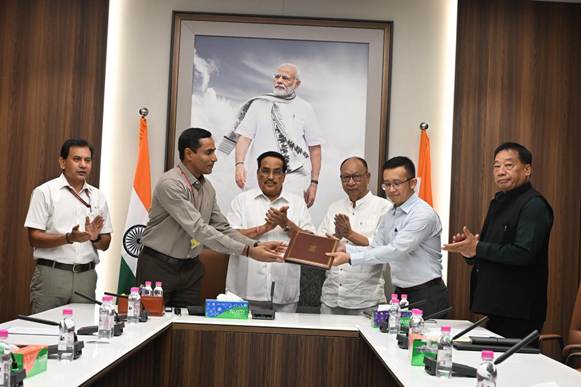
For Manipur, MoU was exchanged between D Senthil Pandiyan, Joint Secretary, NJJM, and Dr Neilinthang Teilien, Secretary to Chief Minister, Manipur in the presence of Union Minister of Jal Shakti, Shri C. R. Patil, Chief Minister of Manipur, Shri Yumnam Khemchand Singh, and Deputy Chief Minister (PHED), Manipur, Shri Losii Dikho.
Marking a pivotal moment in Centre-State collaboration, the MoU with State of Bihar was formally signed after Manipur. The meeting commenced in the presence of Union Minister of Jal Shakti, Shri C. R. Patil, Dr. Raj Bhushan Choudhary, Minister of State, Shri Sanjay Kumar Singh, Minister (PHE) Bihar and other key officials from the State & DDWS.
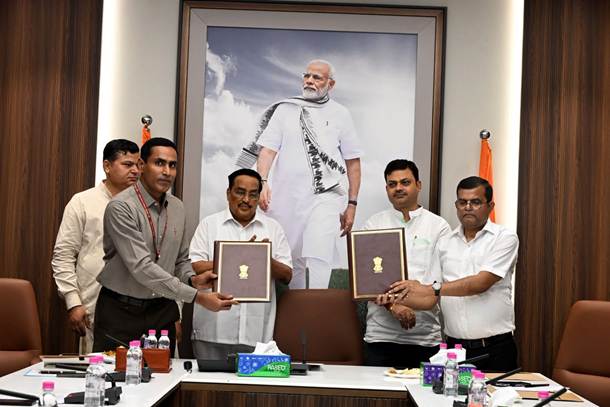
The MoU was signed and exchanged by Shri D Senthil Pandiyan, Joint Secretary, NJJM, and Shri Rajesh Kumar, Principal Secretary, PHE Department, Bihar.
Addressing on the occasions, Union Minister of Jal Shakti, Shri C. R. Patil said that Jal Jeevan Mission, launched under the leadership of the Prime Minister Shri Narendra Modi, has transformed rural drinking water supply across the country and reduced the drudgery of fetching water especially by women and girls. Under JJM 2.0, now the focus is on sustaining the infrastructures created under the Mission, functionality of tap connections, water quality, source sustainability, O&M, community ownership and regular monitoring as key priorities.
The Minister also stressed the need for water conservation, rainwater harvesting, groundwater recharge, catchment area protection using Finance Commission and VB-G RAM G funds. He stressed community-based water quality monitoring and said Gram Panchayats, District Water and Sanitation Missions, State Water and Sanitation Missions and local communities must work together to ensure reliable drinking water services. He reiterated the Government of India’s continued support to the State in achieving the Mission’s objectives.
Addressing Manipur, he expressed confidence that the state would soon complete the remaining tap connections and join the group of States and Union Territories that have achieved universal rural tap water coverage. Appreciating the resilience shown by the State in continuing implementation despite difficult conditions, Shri Patil remarked that Manipur’s achievements would serve as an inspiring example of commitment to ensuring safe drinking water for every rural household.
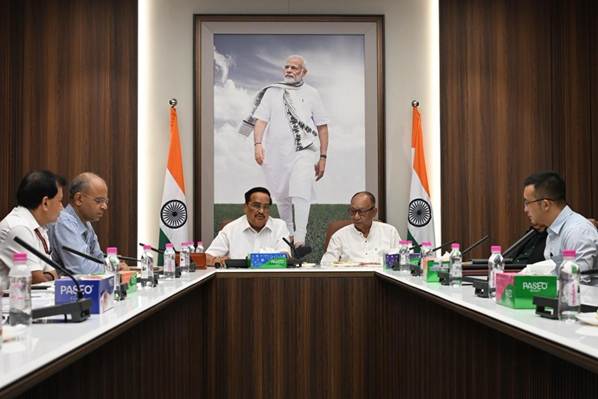
To the state of Bihar, the Union Minister asked to ensure proper O&M, and said he is confident that Bihar will complete the remaining work with the same commitment and determination that has enabled it to achieve over 90 per cent coverage. The State’s contribution will be important in realising the vision of Viksit Bharat-Viksit Bihar and ensuring improved quality of life for millions of citizens.
Speaking on the occasion, the Chief Minister of Manipur, Shri Yumnam Khemchand Singh said, it was a privilege to witness the signing of the Reform-Linked MoU between the Ministry of Jal Shakti and the Government of Manipur under Jal Jeevan Mission (JJM) 2.0. He noted that the next phase of the mission represents a strategic shift from a primary focus on infrastructure creation to ensuring long-term, sustainable drinking water service delivery.
He highlighted that JJM 2.0 places emphasis on service delivery, source sustainability, digital monitoring frameworks, policy reforms, sustainable funding mechanisms, and community participation. These measures, he said, would help transform the Mission from a government programme into a people-centric movement aimed at securing safe and reliable drinking water services for rural communities.
He appreciated the efforts of the Ministry of Jal Shakti in formulating the guidelines for JJM 2.0 and reiterated the State Government’s full commitment to implementing the reform agenda and achieving the Mission’s objectives for improving the quality of life and ensuring sustainable water security for all.
In his address, Shri Sanjay Kumar Singh, Minister PHE Department of Bihar, said that Bihar has remained firmly committed to ensuring safe and adequate drinking water for every rural household. Even before the launch of the Jal Jeevan Mission, the State Government initiated the ambitious ‘Har Ghar Nal Ka Jal’ programme in 2016. Under this initiative, an extensive rural water supply network has been developed. However, Central assistance has helped a lot in achieving significant strides in expanding rural drinking water infrastructure and improving service delivery despite numerous geographical and socio-economic challenges in the state.
He assured that Bihar remains committed to working closely with the Government of India to achieve the shared goal of safe and sustainable drinking water for all.
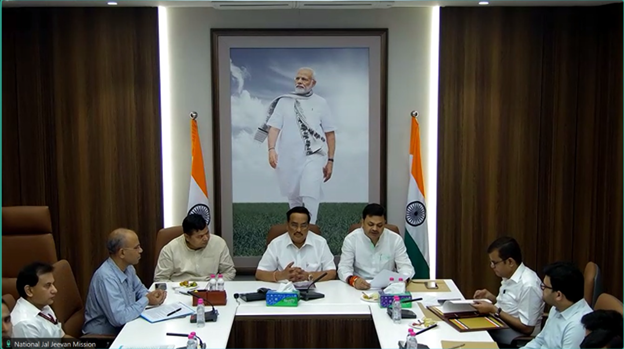
In his opening remark during signing of MoU with Bihar, Shri Ashok K. K. Meena, Secretary, DDWS underscored that the MoU prioritises not just infrastructure setup of pipelines, but sustainable services managed at the grassroots level. He emphasised decentralisation and community ownership, with Gram Panchayats and Village Water & Sanitation Committees (VWSCs) being empowered to manage and operate in-village water supply systems. While stating the importance of the MoU signing with the State and UT, Shri Meena highlighted that the MoU is a shared commitment between the State/UT which ensures the upholding of JJM 2.0 guidelines in order to provide safe, secure and sustainable drinking water to the rural households.
Emphasising the importance of institutional mechanisms for sustainable water service delivery, the Secretary stressed that District Water and Sanitation Mission (DWSM) meetings should be conducted regularly by all District Collectors. He noted that timely meetings would facilitate the preparation of Village Action Plans and support the certification of panchayats as capable institutions for managing rural water supply systems. The Secretary underlined that district administrations would play a crucial role in monitoring implementation, conducting periodic reviews, and extending necessary support to Gram Panchayats whenever required.
He also mentioned that this step is an initiative which aligns with the fulfillment of Prime Minister Shri Narendra Modi’s Har Ghar Nirantar Nal Se Jal vision.
During the MoU with Manipur, Shri Kamal Kishore Soan, AS&MD, NJJM, in his opening remarks, underscored the importance of Manipur in the development of the North-Eastern region and acknowledged the progress made by the State in the rural drinking water sector over the past two years.
He emphasised that the objective of the Jal Jeevan Mission goes beyond merely providing tap connections; it aims to ensure reliable access to safe and clean drinking water for the next 25–30 years. He noted that achieving this goal requires addressing existing gaps and challenges in water supply systems, strengthening infrastructure, and ensuring the sustainability of investments made under the mission.
The Mission Director further highlighted the structural reforms being pursued under JJM 2.0, guided by the Union Minister for Jal Shakti, to strengthen long-term service delivery and water security. He expressed confidence that Manipur would actively advance these reforms and reiterated the Government of India’s commitment to providing continuous technical support, capacity building, and handholding assistance to the State for the effective implementation of the Mission.
Under JJM 2.0, 33 States/UTs out of 34 JJM States/UTs have already signed the MoU with DDWS, Government of India.